A deep clinical dive into atherosclerotic cardiovascular disease: the endothelial glycocalyx shield, the response-to-retention paradigm of ApoB particles, macrophage foam cell biology, coronary calcium scoring, and advanced lipid-lowering therapies.

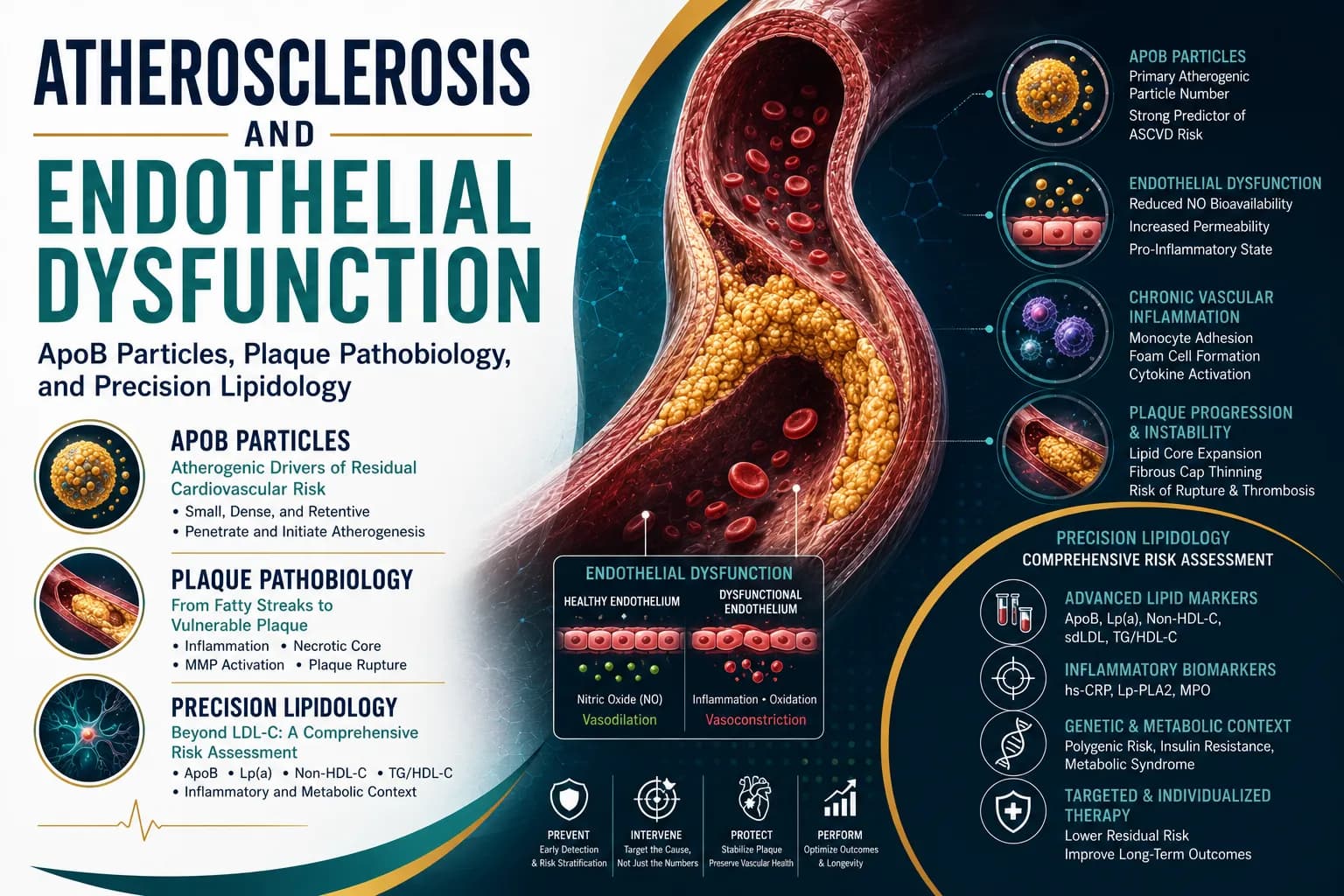
Atherosclerotic cardiovascular disease (ASCVD) remains the single leading cause of mortality and premature loss of healthspan globally, accounting for nearly eighteen million deaths each year. For over half a century, standard clinical risk assessments relied predominantly on basic total cholesterol and calculated Low-Density Lipoprotein Cholesterol (LDL-C) concentrations. However, contemporary precision lipidology and vascular biology have transformed our understanding of plaque biology. Atherosclerosis is not a simple plumbing issue where fat passively clogs arterial pipes; it is a chronic, lifelong, retention-driven immuno-inflammatory disease of the arterial intima initiated and sustained by Apolipoprotein B (ApoB) containing atherogenic particles.
The vascular endothelium—a single monolayer of specialized squamous endothelial cells lining the entire sixty thousand miles of the human circulatory system—acts as a dynamic biological gatekeeper regulating vascular tone, platelet adhesion, cellular migration, and barrier permeability. Covering the luminal surface of endothelial cells is the endothelial glycocalyx, a fragile, gel-like carbohydrate-rich meshwork consisting of proteoglycans, glycosaminoglycans (heparan sulfate and hyaluronic acid), and plasma proteins.
In healthy physiology, the glycocalyx exerts a powerful repulsive electrostatic negative charge that prevents atherogenic lipoproteins and circulating leukocytes from contacting the underlying endothelial cell surface. However, chronic systemic stressors—such as pulsatile shear stress at arterial bifurcations, elevated blood glucose (hyperglycemia), oxidized free radicals, smoking, and hyperhomocysteinemia—strip away this protective glycocalyx shield. Endothelial nitric oxide synthase (eNOS) becomes uncoupled, diminishing nitric oxide (NO) bioavailability, impairing flow-mediated vasodilation, and triggering endothelial activation with upregulation of vascular cell adhesion molecules (VCAM-1 and ICAM-1).
The foundational biophysical event in the genesis of atherosclerosis is the subendothelial entrapment and retention of atherogenic lipoprotein particles within the arterial intima. Every atherogenic lipoprotein particle—including Low-Density Lipoprotein (LDL), Very-Low-Density Lipoprotein (VLDL), Intermediate-Density Lipoprotein (IDL), and Lipoprotein(a) [Lp(a)]—carries exactly one molecule of Apolipoprotein B (ApoB-100) embedded on its surface.
Standard LDL-C blood tests measure only the total mass of cholesterol carried inside LDL particles, which can be highly misleading in individuals with metabolic syndrome, insulin resistance, or diabetes who produce dense concentrations of cholesterol-depleted, small-dense LDL particles (discordance between LDL-C and ApoB particle count). The total number of ApoB particles entering the arterial wall per unit time—not the cholesterol payload inside them—dictates the probability of particle entrapment by subendothelial extracellular matrix proteoglycans. Once trapped, these particles become trapped in the intima and undergo oxidative modification (oxLDL).
Once ApoB particles are retained and oxidized within the subendothelial space, a cascade of sterile vascular inflammation ensues:
Modern preventative cardiology integrates non-invasive imaging to detect subclinical plaque long before symptoms appear:
Atherosclerosis prevention and plaque stabilization require multi-target biochemical control:
Atherosclerosis is a preventable, detectable, and treatable condition. By measuring ApoB early, assessing plaque burden via non-invasive imaging, and deploying targeted lipid-lowering and endothelial-protective therapies, modern cardiovascular medicine empowers individuals to preserve arterial elasticity and enjoy vibrant, lifelong cardiovascular vitality.
Board-certified physician specializing in functional endocrinology, women’s metabolic health, and evidence-based preventive medicine.
0 Comments
Your email address will not be published. Newsletter subscribers are auto-approved; others are moderated for safety.
Explore complementary healthcare insights and medical guides.