An authoritative medical guide to Polycystic Ovary Syndrome (PCOS), exploring Rotterdam diagnostic criteria, thecal androgen hypersecretion, compensatory hyperinsulinemia, and targeted clinical restoration protocols.
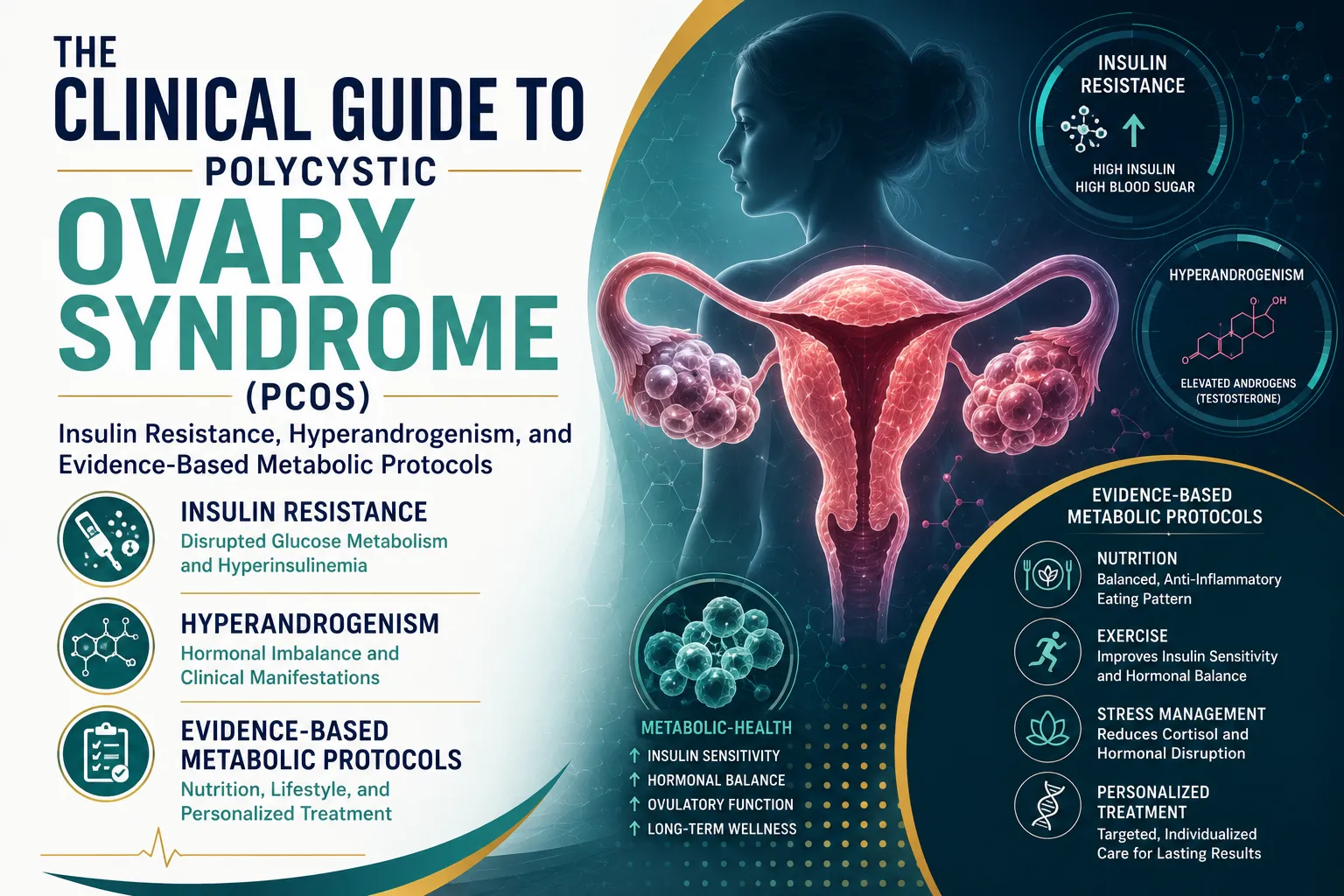
Polycystic Ovary Syndrome (PCOS) is the single most prevalent endocrine-metabolic disorder affecting reproductive-aged women globally, with an estimated prevalence ranging from eight to thirteen percent depending on diagnostic criteria applied. Long misclassified as purely a gynecological or fertility affliction, contemporary clinical endocrinology recognizes PCOS as a complex, lifelong systemic metabolic syndrome characterized by follicular arrest, compensatory hyperinsulinemia, chronic low-grade inflammation, and neuro-endocrine feedback dysregulation. Navigating PCOS requires looking beyond symptom-suppressing oral contraceptives to address the fundamental biological drivers of ovulatory dysfunction and metabolic strain.
Under the internationally established 2003 Rotterdam Consensus (reaffirmed by the 2023 International Evidence-Based Guidelines), a definitive diagnosis of PCOS requires the presence of at least two of the following three clinical cardinal criteria, provided other mimicking etiologies (such as congenital adrenal hyperplasia, hyperprolactinemia, and thyroid disorders) are systematically excluded:
At the pathophysiological heart of at least seventy-five to eighty percent of all PCOS phenotypes—including non-obese or "lean" PCOS—resides intrinsic peripheral insulin resistance. In healthy physiology, insulin coordinates cellular glucose uptake across skeletal muscle and adipose tissue. In PCOS, post-receptor insulin signaling defects impair GLUT4 translocation, triggering chronic compensatory hyperinsulinemia.
Crucially, while peripheral skeletal muscle myocytes become resistant to insulin, the ovarian theca cells remain exquisitely insulin-sensitive. Circulating insulin acts synergistically with luteinizing hormone (LH) on ovarian theca cells, upregulating the gene expression of cytochrome P450c17alpha (CYP17A1). This enzymatic hyperactivity unleashes massive local androgen synthesis. Concurrently, hyperinsulinemia suppresses hepatic production of Sex Hormone-Binding Globulin (SHBG)—the circulating plasma carrier that normally binds testosterone. As SHBG plummets, the percentage of biologically active free testosterone surges, penetrating follicular fluid and arresting the maturation of developing follicles at the pre-antral stage.
PCOS is accompanied by a severe neuroendocrine derangement within the hypothalamus. The Gonadotropin-Releasing Hormone (GnRH) pulse generator in the arcuate nucleus fires with abnormal, rapid frequency. This rapid pulsatile signaling disproportionately stimulates the anterior pituitary to transcribe and secrete luteinizing hormone (LH) over follicle-stimulating hormone (FSH), frequently resulting in an elevated LH-to-FSH ratio exceeding 2:1 or 3:1.
Because FSH levels remain relatively suppressed, developing ovarian follicles cannot receive the necessary granulosa cell stimulation required to convert thecal androgens into estradiol via the aromatase enzyme. Instead, dozens of immature follicles stall in their developmental trajectory, forming the classic peripheral "string of pearls" ultrasonographic appearance and preventing the emergence of a dominant Graafian follicle capable of ovulating.
In approximately twenty to thirty percent of women with PCOS, the primary source of excess androgens originates not within the ovaries, but within the adrenal cortex. Driven by hyper-reactivity of the hypothalamic-pituitary-adrenal (HPA) axis and exaggerated responsiveness to adrenocorticotropic hormone (ACTH), the adrenal zona reticularis hyper-secretes sulfated androgens, specifically DHEA-S. Chronic psychological hyperarousal, circadian disruptions, and sleep deprivation accelerate this adrenal cascade, perpetuating anovulatory cycles even in women with normal metabolic insulin metrics.
The implications of unmanaged PCOS extend far beyond cosmetic concerns or fertility challenges. Women with PCOS face substantially elevated lifetime risks of severe chronic disease:
Reversing the metabolic and endocrine derangements of PCOS demands targeted biochemical, nutritional, and lifestyle interventions:
PCOS is not a life sentence of inevitable disease, but a biological call to understand and nourish your unique metabolic blueprint. By addressing insulin resistance at its cellular origin, soothing hypothalamic stress signals, and supporting hepatic and ovarian hormone clearance, women can restore regular ovulatory cycles, radiant physical vitality, and lifelong cardiometabolic sovereignty.
Board-certified physician specializing in functional endocrinology, women’s metabolic health, and evidence-based preventive medicine.
0 Comments
Your email address will not be published. Newsletter subscribers are auto-approved; others are moderated for safety.