Explore the neuroscience of adult neuroplasticity, Long-Term Potentiation (LTP), hippocampal neurogenesis, BDNF-TrkB signaling pathways, and evidence-based protocols to build durable cognitive reserve.

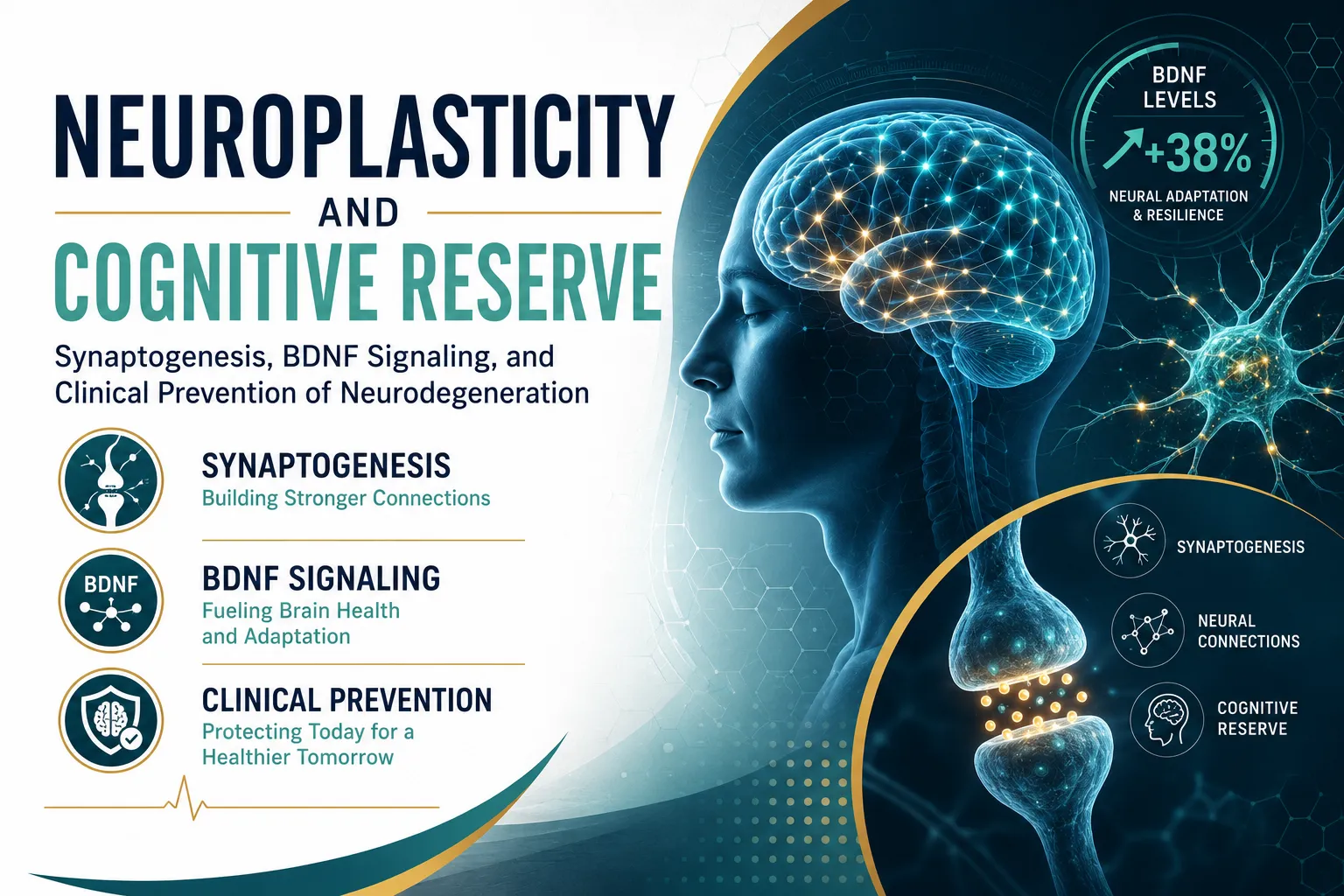
The human brain—a three-pound organ containing approximately eighty-six billion neurons interconnected by over one hundred trillion synaptic junctions—is the most complex and metabolically dense computational network in the known universe. Consuming over twenty percent of the body's total basal metabolic energy despite representing only two percent of total body mass, the brain requires constant, exquisite biological orchestration. For decades, traditional neuroanatomy taught that the adult central nervous system was a static, hard-wired structure: neurons lost to injury or aging were gone forever, and cerebral architecture was permanently fixed after early childhood. Today, the discovery of adult neuroplasticity and cognitive reserve has overturned this dogma, revealing that the human brain possesses an extraordinary capacity to structurally reorganize, build new synaptic circuits, and generate fresh neurons throughout the entire lifespan.
Neuroplasticity describes the biological capacity of neural networks to modify their synaptic connectivity and functional circuitry in response to novel experiences, cognitive demands, environmental stimuli, and neurological injury. The molecular foundation of this phenomenon is grounded in Hebb's Postulate, famously summarized as "neurons that fire together, wire together."
At the synaptic level, this dynamic remodeling occurs primarily through Long-Term Potentiation (LTP)—the persistent strengthening of synapses based on recent patterns of neurochemical activity. During learning or novel cognitive engagement, repetitive high-frequency electrical pulses stimulate presynaptic terminals to release the excitatory neurotransmitter glutamate into the synaptic cleft. Glutamate binds to postsynaptic alpha-amino-3-hydroxy-5-methyl-4-isoxazolepropionic acid (AMPA) receptors, causing rapid sodium influx and localized depolarization.
This localized electrical shift dislodges a protective magnesium ion (Mg2+) that physically blocks adjacent N-methyl-D-aspartate (NMDA) receptors. Once liberated, NMDA receptors permit a massive influx of intracellular calcium (Ca2+) ions into the postsynaptic dendritic spine. Elevated calcium activates Calcium/Calmodulin-Dependent Protein Kinase II (CaMKII), triggering the insertion of additional AMPA receptors into the postsynaptic density and driving structural dendritic spine enlargement (synaptogenesis). This molecular mechanism permanently increases synaptic sensitivity, laying down the durable neuro-architectural substrate of long-term memory.
Beyond remodeling existing synapses, the adult human brain retains the remarkable capability to generate brand-new functional neurons—a process known as adult neurogenesis. This biological phenomenon occurs predominantly within two specialized neurogenic niches: the subventricular zone (SVZ) lining the lateral ventricles and the subgranular zone (SGZ) of the dentate gyrus within the hippocampus.
Inside the dentate gyrus—the cerebral crossroads of episodic memory formation, emotional regulation, and spatial navigation—neural stem cells continuously divide and differentiate into immature neuroblasts. Over several weeks, these newborn cells migrate into the granular cell layer, sprout intricate dendritic arbors, project axons toward the CA3 hippocampal subfield, and become fully integrated into existing mnemonic circuits. Neurogenesis is essential for "pattern separation"—the cognitive ability to distinguish between closely related memories without catastrophic cognitive interference.
The master molecular orchestrator of both synaptic plasticity and adult neurogenesis is Brain-Derived Neurotrophic Factor (BDNF). Synthesized by cortical neurons and astrocytes, BDNF binds with high affinity to its cognate tyrosine kinase receptor B (TrkB). Upon activation, the BDNF-TrkB complex autophosphorylates, stimulating three major downstream intracellular signaling cascades:
Circulating and cerebral BDNF concentrations decline progressively with advancing age, accelerated by chronic psychological distress, sustained sleep deprivation, and sedentary lifestyle. Conversely, robust physical exercise, environmental enrichment, and intermittent fasting stimulate the hepatic and muscular release of systemic signaling molecules (such as the myokine irisin and the ketone body beta-hydroxybutyrate), which cross the blood-brain barrier to directly trigger robust hippocampal BDNF gene transcription.
A profound insight from modern clinical neurology is the concept of "cognitive reserve." Longitudinal neuropathological autopsies regularly reveal that a significant percentage of elderly individuals whose brains exhibit advanced Alzheimer's disease pathology (dense extracellular amyloid-beta plaques and intraneuronal neurofibrillary tau tangles) remained completely cognitively intact throughout their lives, exhibiting zero clinical dementia symptoms.
These resilient individuals possessed high cognitive reserve—a dense, highly redundant, and flexible synaptic network built across decades of lifelong intellectual engagement, multilingualism, physical fitness, and complex social connection. When specific neural pathways were damaged by neurodegenerative protein accumulation, their brains seamlessly rerouted electrical transmission through alternate, uncompromised synaptic circuits, maintaining pristine cognitive function despite underlying structural pathology.
Proactive assessment of neurocognitive integrity requires integrating imaging, functional biomarkers, and cognitive metrics:
Preserving cerebral vitality and maximizing neuroplasticity requires targeted lifestyle and biochemical interventions:
Your brain is an exquisite, dynamic biological tapestry that is continually being rewritten by every thought you contemplate, every challenge you embrace, and every physiological stressor you overcome. Cognitive decline is not an inevitable consequence of aging, but a preventable biological breakdown. By actively nourishing synaptic connections, stimulating growth factor cascades, and cultivating unyielding cognitive reserve, you build a fortress of mental brilliance, emotional equilibrium, and lifelong neurological vitality.
Board-certified physician specializing in functional endocrinology, women’s metabolic health, and evidence-based preventive medicine.
0 Comments
Your email address will not be published. Newsletter subscribers are auto-approved; others are moderated for safety.