Discover the molecular oncology of aerobic glycolysis, immunosuppressive tumor stroma, PD-1/PD-L1 immune checkpoint blockade, CAR-T adoptive cell therapies, and integrative metabolic oncology.

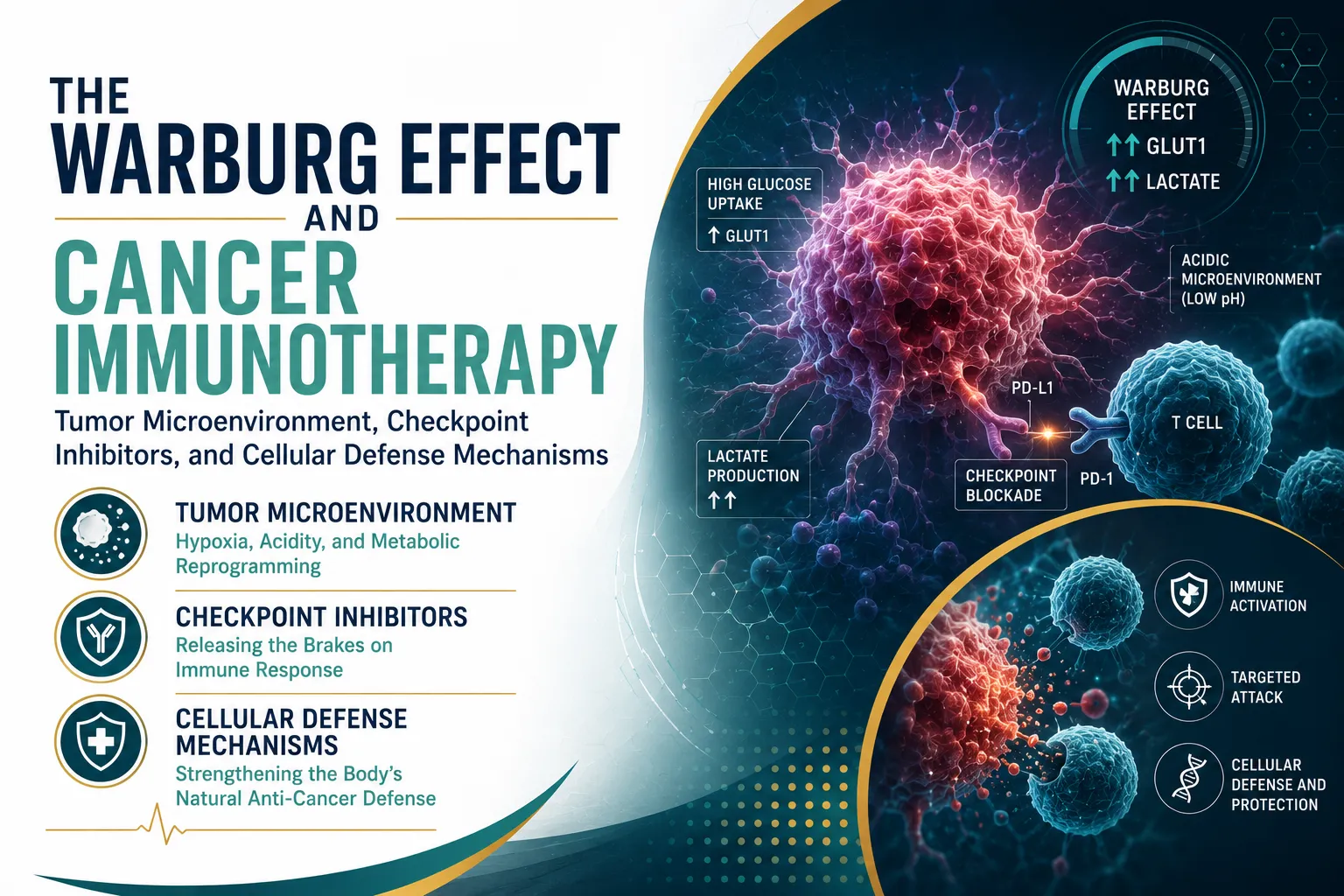
For more than half a century, the dominant paradigm in clinical oncology framed malignant neoplasia primarily as a genetic disease—a progressive sequence of somatic DNA mutations that inactivate tumor suppressor genes and hyper-activate proto-oncogenes. While genomic instability is indisputably a hallmark of carcinogenesis, a profound revolution in cancer biology has revealed that cancer is fundamentally a metabolic and immunological disease. Malignant transformation requires profound metabolic reprogramming to support rapid cellular proliferation, coupled with active subversion of host immune surveillance. Understanding the interplay between tumor bioenergetics, the immunosuppressive tumor microenvironment, and cutting-edge immunotherapies represents the preeminent frontier in contemporary oncology.
In 1924, Nobel laureate Otto Warburg made an observation that remains foundational to modern oncology: cancer cells exhibit an aberrant metabolic phenotype termed "aerobic glycolysis." In healthy somatic tissues, cells metabolize glucose through glycolysis into pyruvate, which is transported into the mitochondrial matrix to generate thirty-six to thirty-eight molecules of ATP via the citric acid cycle and oxidative phosphorylation (OXPHOS). Glycolysis is reserved primarily for hypoxic emergencies.
In stark contrast, malignant cells deliberately convert up to ninety percent of available glucose into lactate, even in the presence of abundant oxygen (aerobic glycolysis). While this produces a meager two ATP molecules per glucose molecule, it confers decisive evolutionary advantages to rapidly dividing cancer cells:
A malignant tumor is not merely a collection of isolated clonal cancer cells; it is an intricately organized, dysfunctional organ known as the tumor microenvironment (TME). The TME comprises cancer-associated fibroblasts (CAFs), endothelial cells, extracellular matrix scaffolds, and an array of corrupted host immune cells that have been reprogrammed by the tumor into an immunosuppressive shield:
Under normal physiological conditions, immune checkpoints are crucial regulatory molecules that terminate immune responses and prevent catastrophic autoimmune destruction of healthy tissues. Malignant tumors cynically hijack these inhibitory pathways to render host immune cells functionally anergic.
The most prominent checkpoint involves Programmed Cell Death Protein-1 (PD-1), expressed on the surface of activated T-lymphocytes, and its ligand, PD-L1, expressed on tumor cells and tumor-associated macrophages. When tumor PD-L1 engages T-cell PD-1, intracellular phosphatases (SHP-1 and SHP-2) are recruited to dephosphorylate the T-cell receptor (TCR) and CD28 co-stimulatory domains, shutting off T-cell proliferation, cytokine secretion, and cytotoxic perforin/granzyme release.
The development of immune checkpoint inhibitors (ICIs)—monoclonal antibodies targeting CTLA-4 (ipilimumab), PD-1 (pembrolizumab, nivolumab), and PD-L1 (atezolizumab)—has fundamentally revolutionized oncology. By physically blocking these inhibitory receptor-ligand interactions, ICIs remove the molecular "brakes," unleashing the patient's endogenous cytotoxic T-lymphocytes to recognize tumor neoantigens and mount a targeted, durable cytotoxic assault against metastatic cancer deposits.
Representing the pinnacle of personalized cellular medicine, Chimeric Antigen Receptor (CAR) T-cell therapy involves harvesting a patient's autologous T-lymphocytes via leukapheresis, genetically re-engineering them in specialized laboratories with synthetic receptors, and infusing them back into the patient. These synthetic CARs combine an extracellular single-chain antibody variable fragment (scFv) that binds specific tumor surface antigens (such as CD19 in hematologic B-cell malignancies or BCMA in multiple myeloma) with intracellular T-cell activation (CD3-zeta) and co-stimulatory domains (CD28 or 4-1BB).
Once re-infused, CAR-T cells act as living therapeutic drugs, proliferating exponentially within the patient's bloodstream and destroying millions of malignant cells with single-cell precision, achieving durable complete remissions in refractory leukemia and lymphoma patients who had previously failed all conventional chemotherapy lines.
While cutting-edge immunotherapy and targeted agents represent foundational pillars of oncological treatment, emerging clinical research emphasizes the decisive role of host systemic metabolic health in modulating treatment responsiveness and reducing recurrence risk:
The paradigm of oncology has decisively evolved from unselective cytotoxic destruction toward precision biological modulation. By dismantling tumor metabolic adaptations, disabling immunosuppressive microenvironmental shields, and unleashing the exquisite specificity of the human immune system, medicine is transforming cancer from an acute, terminal diagnosis into a manageable, curable chronic disease—heralding an unprecedented era of hope, longevity, and restorative survivorship.
Physician-scientist with 15+ years of research in cellular oncology, immunotherapy microenvironments, and cognitive reserve mechanisms.
0 Comments
Your email address will not be published. Newsletter subscribers are auto-approved; others are moderated for safety.